

Water features are among the most beloved elements in landscape design. The soothing sound of flowing water, the visual appeal of reflective pools, and the wildlife they attract make fountains, ponds, and waterfalls the centerpieces of outdoor spaces. But when winter arrives in Colorado Springs, many homeowners face a dilemma: how do you protect your investment while keeping your landscape visually appealing through the cold months?
The traditional approach—draining everything, covering it with tarps, and hoping for the best—leaves your yard looking abandoned and neglected from November through March. But there’s a better way. With creative thinking and proper techniques, your water features can remain stunning focal points throughout winter, and in some cases, become even more magical than during summer months.
At Fredell Enterprises, we help Colorado Springs homeowners transform their water features for winter rather than simply shutting them down. Whether you’re working with fountains, ponds, waterfalls, or modern water bowls, let’s explore how to winterize intelligently while maintaining, or even enhancing, your landscape’s aesthetic appeal.
Understanding Colorado’s Winter Water Feature Challenges
Before diving into creative solutions, it’s important to understand what we’re dealing with. Colorado Springs winters present unique challenges for water features:
Freeze-thaw cycles occur constantly throughout our winters. A sunny 50-degree afternoon can be followed by a 10-degree night. Water expands by approximately nine percent when it freezes, creating tremendous pressure that can crack pumps, split pipes, damage fountain basins, and destroy decorative elements.
Extreme temperature swings mean that features can’t simply freeze solid and stay frozen like they would in consistently cold climates. The constant cycling between frozen and thawed states creates the most damage.
Intense sun exposure at our elevation continues even in winter. This accelerates evaporation and creates temperature differentials that stress materials.
Low humidity and high winds rapidly evaporate water from any features left running, requiring constant refilling and creating ice buildup in unexpected places.
These conditions mean that most traditional water features can’t simply continue operating as-is through winter. Pumps will burn out, plumbing will burst, and basins will crack. However, with the right approach, you can work with winter’s unique qualities rather than fighting against them.
The Art of Winterizing While Maintaining Beauty
Transform Your Fountain Into a Winter Sculpture
Rather than viewing winterization as making your fountain “go away,” think of it as transforming it into a different kind of art piece. Here are several approaches:
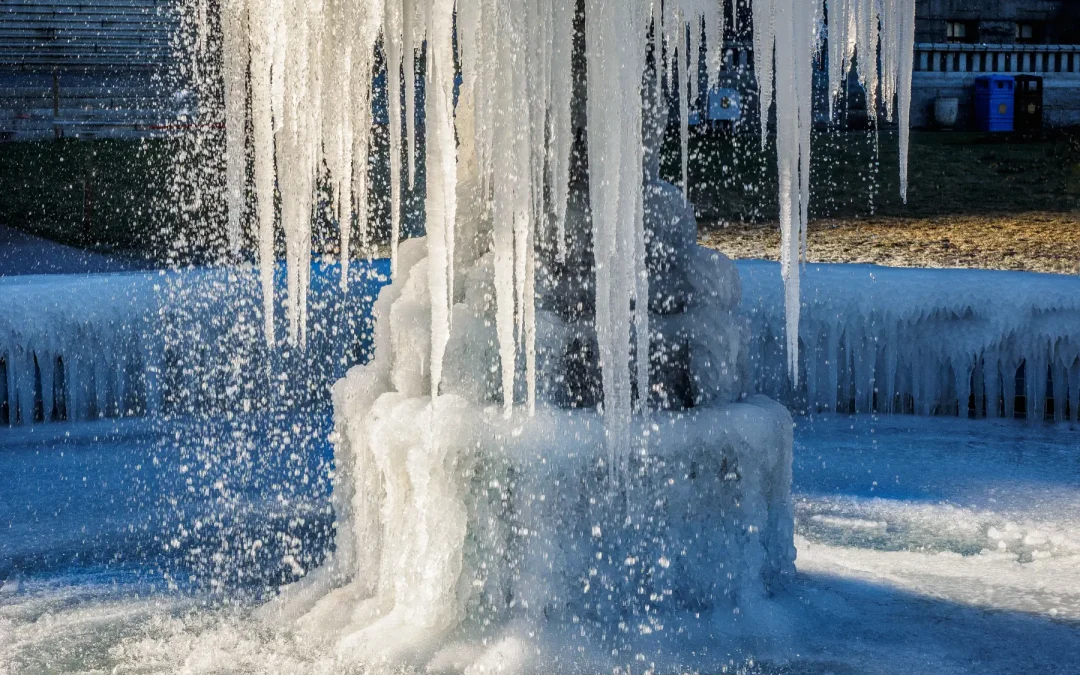
The Ice Sculpture Approach: Some fountain designs lend themselves beautifully to controlled freezing. If you have a tiered fountain or one with interesting shapes, you can allow water to freeze strategically, creating natural ice sculptures. Before the first hard freeze, drain the fountain completely to protect the basin and pump. Then, during cold snaps, carefully pour water over the fountain structure, allowing it to freeze in layers. This creates stunning icicle formations and ice cascades that catch winter sunlight beautifully.
- This technique works especially well with:
- Tiered fountains where water can cascade and freeze dramatically
- Sculptural fountains with interesting shapes that look beautiful encased in ice
- Modern abstract fountains where ice adds an unexpected dimension
Important safety note: Only do this with fountains specifically designed to handle freeze-thaw stress. Cast stone, quality concrete, and metal fountains can typically handle this treatment. Ceramic, thin resin, or delicate materials cannot.
The Winter Garden Focal Point: Even a completely winterized, empty fountain can remain beautiful with thoughtful decoration. Remove and store the pump, drain the fountain completely, and then transform the basin into a winter container garden. Fill with evergreen boughs (pine, spruce, juniper), red twig dogwood branches for color contrast, birch branches for textural interest, and even seasonal decorations like pine cones, winter berries, or elegant outdoor lights.
This approach keeps your fountain as a landscape focal point while protecting it completely from freeze damage. Change the arrangement throughout winter to keep things fresh—perhaps a more natural look through January and February, then add subtle spring hints with pussy willow branches in March.
The Protective Cover as Design Element: If you need to protect a delicate fountain, the cover itself can be attractive. Instead of ugly blue tarps, consider:
- Custom-fitted canvas covers in neutral earth tones
- Decorative wooden boxes or enclosures that complement your landscape style
- Breathable fabric covers secured with decorative rope or hardware
- Artistic wrapping with burlap and natural materials
The key is making protection part of your winter design rather than an eyesore you’re trying to hide.
Winter-Safe Running Water Features
Heated Water Features: Modern technology makes year-round water features possible, even in our climate. Options include:
De-icer systems: Floating heaters or in-line heaters keep water temperature just above freezing (typically around 40°F). These work well for ponds and larger basin features. The running water creates mesmerizing fog effects on cold mornings and prevents complete freeze-over.
Heated waterfalls: For waterfall features, heating elements can be installed in the reservoir to prevent freezing. Combined with adequate circulation, these can operate even when temperatures drop into the teens.
Recirculating systems with heating: Some high-end fountain systems include heating elements that keep water flowing without freezing. These require electrical work and increased energy costs but create stunning winter focal points.
Considerations for heated features:
- Energy costs increase significantly
- Regular monitoring is essential to prevent system failures
- Evaporation is rapid in our dry climate, requiring frequent water additions
- You’ll need GFI-protected electrical service rated for outdoor winter use
Pondless Waterfalls and Disappearing Fountains: These systems have advantages for winter operation because they minimize exposed water surface. The reservoir is buried underground where temperatures stay more stable, and only the visible portion needs protection from freezing.
For winter operation:
- Ensure the reservoir is deep enough to stay below the frost line (36+ inches in Colorado Springs)
- Use adequate circulation to prevent ice formation
- Consider adding heating elements to the reservoir
- Monitor water levels closely as evaporation continues
Bubbling Rock and Sphere Features: These modern features often handle winter better than traditional fountains. The small water volume and constant movement resist freezing. Many can operate in winter with minimal modifications:
- Ensure the reservoir stays above freezing with heating or insulation
- Increase the pump flow slightly to keep water moving faster
- Monitor for ice buildup on the stone or sphere surface
- Be prepared to shut down during extreme cold snaps (below 0°F)
The visual effect of water bubbling over a boulder or sphere surrounded by snow is truly striking.
Creating Intentional Ice Features
Ice Fountains: This technique involves building temporary structures that are meant to freeze into ice sculptures. Create a simple framework of branches or wire forms, position it where your summer fountain sits, and then spray or pour water over it during freezing temperatures. The ice builds up layer by layer, creating unique sculptures that evolve throughout winter.
Artists in northern climates have perfected this technique, creating elaborate ice sculptures that can reach several feet tall. On a smaller scale, homeowners can create beautiful ice features that serve as winter focal points.
Frozen Basin Gardens: Use your fountain or pond basin as a base for an intentional ice garden. Place interesting objects in the basin—colorful leaves, evergreen branches, berries, flowers, even citrus slices—then fill with water and allow to freeze. The result is a natural ice sculpture that holds visual interest through the winter.
As the ice melts and refreezes through our temperature fluctuations, it creates ever-changing patterns and effects.
Ice Luminarias: For evening beauty, create ice luminarias in or around your water feature area. Freeze water in containers with candles or LED lights, then arrange the ice blocks around your winterized fountain or pond. The light glowing through the ice creates magical evening ambiance.
Pond Winterization With Visual Appeal
Keep It Partially Running: If you have a pond with fish (koi or goldfish), you’ll need to maintain some water circulation and prevent complete freeze-over so fish can survive. Options include:
Floating de-icers: These create a small hole in the ice, allowing gas exchange for fish while creating interesting steam and fog effects on cold mornings.
Bubbler systems: Air stones or bubblers keep a small area ice-free while creating visual interest. The rising bubbles create patterns in the ice that change daily.
Small recirculating pump: Keep a small pump running at minimal flow to maintain a small ice-free area. This is less about aesthetics and more about fish survival, but the open water area creates contrast with the surrounding ice.
Winter Pond Decor: Even with pond equipment running, you can enhance winter appeal:
- Float evergreen wreaths or arrangements that freeze partially into the ice
- Add decorative elements around the pond perimeter that complement winter landscapes
- Use the pond edge for winter container plantings
- Install outdoor lighting to highlight the pond in evening hours
The Full Freeze Option: If you don’t have fish, you can allow the pond to freeze completely after proper preparation. This creates a beautiful reflective surface and eliminates all maintenance. Before freezing:
- Remove and store all pumps and filters
- Clean out debris that would look unsightly under ice
- Lower the water level slightly to allow for ice expansion
- Remove delicate plants or items that could be damaged
A frozen pond with a light dusting of snow becomes a reflective element that captures sky colors and provides visual interest through the season.
Step-by-Step: Winterizing Traditional Fountains
Timing: Winterize after the first hard freeze (typically late October to early November in Colorado Springs) but before sustained freezing weather arrives.
The Process:
- Turn off and unplug all electrical components.
- Drain completely: Remove all water from the basin, pump, and any plumbing. Tip the fountain if possible to drain every last drop. Water trapped anywhere will freeze and cause damage.
- Clean thoroughly: Remove leaves, algae, and debris. A clean fountain is ready to go when spring arrives.
- Remove the pump: Take the pump indoors for storage. Clean it, remove any buildup, and store it in a dry location. Consider storing it in a bucket of water to keep seals from drying out.
- Protect plumbing: If your fountain has plumbing that can’t be removed, blow it out with compressed air to remove all water.
- Add visual elements: Now transform the empty fountain into a winter feature with evergreen arrangements, decorative branches, or seasonal decor.
- Cover if needed: If your fountain material requires protection from freeze-thaw damage, cover with a breathable fountain cover. Secure it against wind.
Spring Preparation: In late March or early April, remove winter decorations, inspect for any damage, clean if needed, reinstall the pump, and refill. Your fountain is ready for another season.
Modern Alternatives: Winter-Ready Water Features
Fire and Water Combinations: Features that combine fire elements with water are increasingly popular. In winter, you can run just the fire component, creating warmth and ambiance while the water portion is winterized. The fire bowl or feature remains a stunning focal point.
Sculptural Elements: Some modern water features are designed as sculptures that function with or without running water. In summer, water flows over or around the sculpture. In winter, the sculpture itself provides visual interest, perhaps enhanced with lighting or seasonal decorations.
Seasonal Transformation Features: Design water features that intentionally transform between seasons. A modern basin that’s a fountain in summer becomes a fire pit in winter. A water wall becomes a vertical garden backdrop. This requires planning during installation but creates year-round functionality.
Maintenance Throughout Winter
Check covers and protection after major storms to ensure they haven’t blown loose or collected excessive snow weight.
Monitor for ice damage if you’re using the controlled freezing approach. Too much ice weight can damage even sturdy fountains.
Clear heavy snow from fountain tops and delicate elements to prevent damage from snow weight.
Refresh decorative elements if evergreen boughs or branches start looking tired. Fresh materials mid-winter keep things looking intentional rather than neglected.
Inspect after warm spells for any water accumulation that could refreeze and cause damage.
Professional Winterization Services
Our experience with local conditions means we know exactly how to protect your specific feature type and can offer creative solutions that keep your landscape beautiful through every season.
Embracing Winter’s Unique Beauty
Water features don’t have to disappear or become eyesores during Colorado’s winter months. With creativity, proper techniques, and sometimes a willingness to work with winter rather than against it, these beloved landscape elements can remain focal points of beauty throughout the cold season.
Whether you choose to transform your fountain into a winter garden, create intentional ice sculptures, invest in heating for year-round operation, or simply protect features with attractive covers and seasonal decorations, your water features can contribute to winter landscape appeal rather than detracting from it.
Winter in Colorado Springs offers unique aesthetic opportunities—crisp air, brilliant sun, the contrast of snow against evergreens, and dramatic light. Your water features, properly handled, can enhance these qualities and keep your landscape engaging through every season.
Ready to develop a winter strategy for your water features? Contact Fredell Enterprises today, and let’s create a plan that protects your investment while keeping your landscape stunning all year long.