

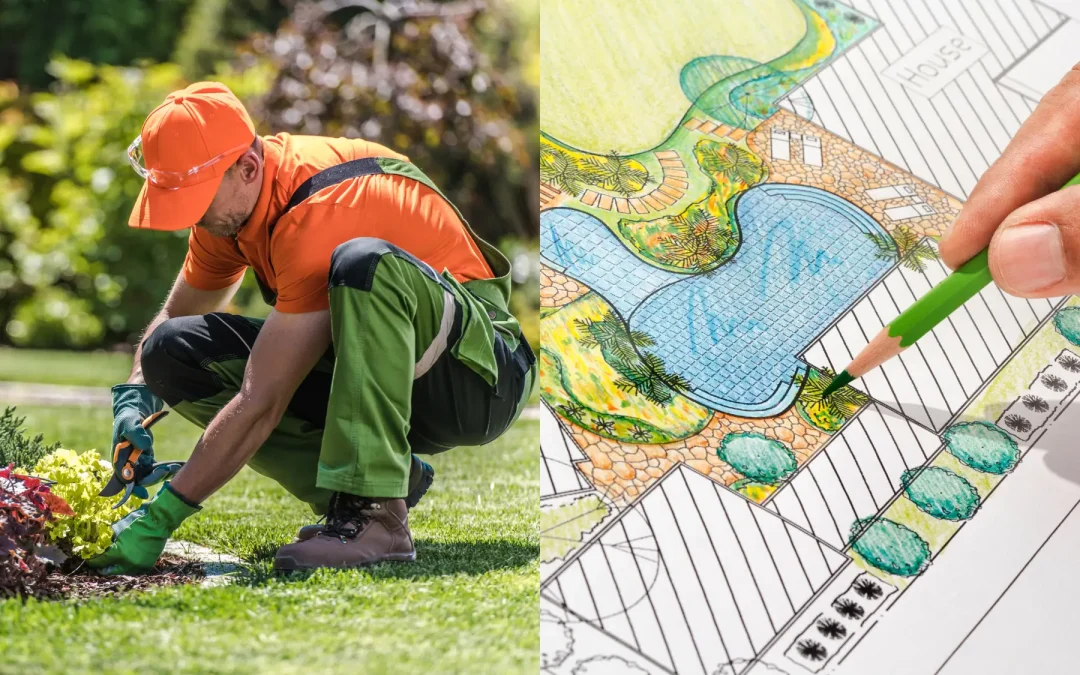
If you’ve ever started planning a new yard or outdoor project, you’ve probably heard both of these terms: landscaper and landscape designer. At first, they might sound interchangeable; after all, both work with outdoor spaces, and both roles are essential in creating beautiful and functional outdoor spaces. But while their roles can overlap, they focus on different parts of the landscaping process and bring unique skills to the table.
Understanding the difference can save you time, money, and headaches when you’re planning your outdoor transformation, help you choose the right professional for your project, and ensure that your vision becomes a reality. In this guide, we’ll break down what each role involves, where they overlap, and when to hire one over the other.
The Big Picture: Designer vs. Builder
The simplest way to think about the difference is this:
- Landscape Designers focus on planning your outdoor space — they create the vision, the drawings, and the detailed layout of plants, pathways, patios, and other features.
- Landscapers focus on installing and maintaining that vision — they handle the actual construction, planting, and upkeep.
Of course, the real world isn’t always so black and white. Some landscape designers get their hands dirty on the job site, and many landscapers offer design services. But in general, one specializes in creating the plan and the other in bringing it to life.
What Does a Landscape Designer Do?
Think of a landscape designer as the architect of your outdoor space. They don’t just pick plants and place pavers; they think through the entire layout and how each element works together. A landscape designer is primarily responsible for the creative and planning phase of a project. They envision the big picture — how different elements will come together aesthetically and functionally — before any construction or planting begins. Their work may include:
1. Concept Development
A landscape designer starts by listening to your goals. Do you want a low-maintenance yard? A pollinator garden? A backyard oasis for entertaining? They consider how you’ll use the space, your personal style, and your budget.
They may also evaluate:
- Your property’s sunlight and shade patterns
- Existing plants and structures
- Drainage and soil conditions
- Views you want to highlight or hide
2. Design Plans
- Planting plans that show where each plant species will go
- Hardscape layouts for patios, retaining walls, walkways, or water features
- Elevation drawings for sloped yards or multi-level spaces
- Color renderings so you can visualize the finished project
3. Knowledge of Plants and Materials
Landscape designers know how plants will grow and change over time. They consider:
- Bloom times for seasonal color
- Plant spacing to avoid overcrowding
- Which species thrive in your climate and soil
- How to combine textures, heights, and colors for balance
They’re also familiar with materials like stone, pavers, wood, and metal to ensure your hardscapes look great and last long.
4. Collaboration with Installers
Landscape Architects vs. Designers
You may also hear the term landscape architect, which refers to a licensed professional with formal education in landscape architecture. Landscape architects can handle more complex projects, such as large public spaces or designs requiring structural considerations like grading and drainage engineering.
While landscape architects operate at a more technical and often larger scale, a landscape designer can be the perfect fit for most residential and small commercial projects, offering creativity and functionality without the same level of regulatory oversight required for architectural work.
What Does a Landscaper Do?
If the landscape designer is the architect, the landscaper is the builder. Landscapers bring the vision to life, working with soil, plants, stone, and machinery to install and maintain your yard. A landscaper is generally focused on the hands-on work of building, planting, and maintaining outdoor spaces. They are the boots-on-the-ground professionals who transform a design concept into a living, thriving landscape. Landscapers can specialize in several areas, including:
1. Site Preparation
Before anything can be installed, the landscaper preps the area:
- Removing old plants, sod, or debris
- Grading and leveling the land
- Installing drainage systems
- Bringing in fresh soil or mulch
2. Installation of Plants and Hardscapes
Landscapers are skilled in the hands-on work of:
- Planting trees, shrubs, flowers, and grass
- Installing irrigation systems
- Building patios, walkways, and retaining walls
- Setting up outdoor lighting
- Adding decorative features like fountains or fire pits
3. Equipment Operation
4. Ongoing Maintenance
Many landscaping companies also offer maintenance services such as:
- Mowing and edging lawns
- Pruning shrubs and trees
- Mulching and weeding garden beds
- Seasonal plantings
- Fertilizing and pest control
While maintenance isn’t part of the design process, it’s essential for keeping the yard looking as good as the day it was installed.
Key Differences at a Glance
| Landscape Designer | Landscaper |
| Creates the vision and plans | Brings the vision to life |
| Works with drawings, layouts, and plant lists | Works with soil, plants, and building materials |
| Focuses on aesthetics, function, and long-term growth | Focuses on proper installation and maintenance |
| May act as project manager | May offer design services, but typically based on experience rather than formal design training |
| Often has specialized education or certification | Skilled in hands-on construction, planting, and equipment operation |
Education and Training
Landscape Designer
Landscaper
Which One Do You Need?
Choosing between a landscaper and a landscape designer depends on the scope and complexity of your project:
- If you already have a clear plan and simply need the work done — such as installing plants, building a path, or putting in sod — a landscaper can get the job done.
- If you need guidance on how to transform your outdoor space — from selecting the right plants to arranging features in a cohesive way — a landscape designer can develop the plan that a landscaper will later execute.
In many cases, you might need both to achieve your desired results.
When to Hire a Landscape Designer
You’ll benefit from a landscape designer if:
- You’re starting from scratch with a new property
- You want a full outdoor makeover with cohesive style
- You have complex site conditions, like slopes or drainage issues
- You’re investing in high-end hardscapes or specialized plantings
- You want detailed, professional drawings to guide the installation
A designer’s plans can help you avoid costly mistakes, like planting species that won’t survive in your yard or placing patios in spots that get too much wind.
When to Hire a Landscaper
A landscaper is the right choice if:
- You already have a design or clear vision for your yard
- You need installation of plants, sod, irrigation, or hardscapes
- You want seasonal maintenance or upgrades
- You’re replacing or refreshing existing features without major layout changes
If you’re on a smaller budget, some landscapers can help sketch simple layouts or make plant recommendations without a full design package.
How Landscapers and Designers Work Together
In many projects, a landscape designer and a landscaper work hand-in-hand. The designer develops the vision, ensuring the design complements the home’s architecture, the terrain, and the homeowner’s lifestyle. The landscaper then brings that vision to life through skilled construction, planting, and installation work.
For example:
- Step 1: The landscape designer creates a plan for a new backyard patio with surrounding flower beds, a water feature, and an irrigation system.
- Step 2: The landscaper follows those plans to build the patio, install the water feature, plant the flowers, and set up the irrigation system.
This teamwork ensures both beauty and functionality, resulting in a finished space that is both aesthetically pleasing and sustainable.
What About Design-Build Companies?
Some companies offer design-build services, meaning they have both designers and installation crews under one roof. This can make the process more seamless, since the same team handles both the planning and the construction.
Benefits of design-build:
- Smoother communication between design and installation
- Faster project timelines
- One point of contact from start to finish
Fredell Enterprises: Bringing Design and Construction Together
If you’re looking for a team that can handle both the creative vision and the skilled execution, Fredell Enterprises in Colorado Springs offers the best of both worlds. With over 40 years of experience, Fredell provides full-service landscape architecture, design, and construction. From the initial consultation and design phase to the final installation of plants, patios, or outdoor living spaces, our team ensures every project blends beauty, functionality, and long-term durability.
You can learn more about Fredell’s landscape design services here: Colorado Springs Landscape Design or explore our company background here: About Fredell Enterprises.
The Final Pick
While landscape designers and landscapers may sound similar and both work toward creating beautiful outdoor spaces, their roles are distinct but complementary: one creates the plan, and the other makes it real. A designer lays the creative groundwork, and a landscaper brings it to life.
If you want a cohesive, long-term vision for your yard, start with a designer. If you’re ready to install or refresh your outdoor space, a landscaper is your go-to. And if you want the best of both worlds, look for a design-build company that can guide you from the first sketch to the last planted flower.
For Colorado Springs homeowners who want a seamless experience from concept to completion, working with a company like Fredell Enterprises, which offers both, ensures your outdoor space is as stunning as it is functional.